By Jonathan Whitcomb
In recent years, a few skeptics have suggested that the Ptp image originated with the TV show FreakyLinks with “Coelacanth This”, which was the fourth episode of the first season (year 2000). Unfortunately for the skeptical side, they have not provided any direct evidence but rely on second-hand or third-hand accounts and the skeptics’ unverified imagination.
Those critics do not mention any person who worked on any supposed computer model (or physical model) or who worked with supposed actors in the supposed creation of Ptp. In fact, as best as I can tell at present, they have not mentioned even one person who witnessed anyone working on such a supposed digital or physical model, since they seem to imply that there was either a 3D computer model or a physical model.
By the way, the FreakyLinks TV episodes were scary science-fiction supernatural-themed stories on the Fox network, broadcast from October of 2000 until June of 2001. You might call it a series of hoax shows, except that most viewers are aware, or should be, that they are watching fiction.
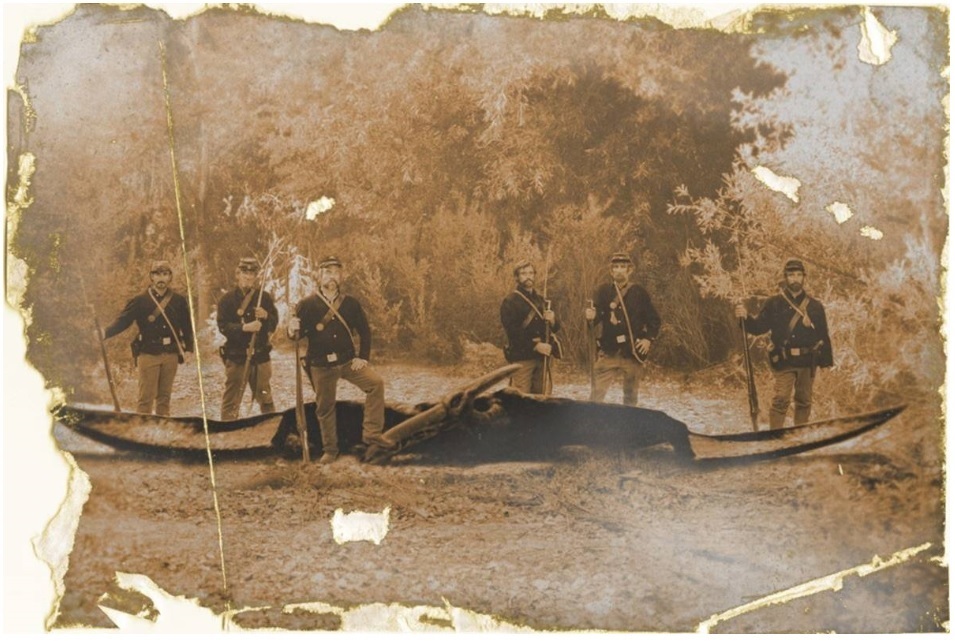 The complete image that is now called “Ptp”
.
“Coelacanth This!” FreakyLinks Episode
The story does not begin with a pterodactyl; that comes later. A group of young investigators dive into a mysterious death from something that could have been a monster of some kind. The drama then evolves into a pterodactyl-like flying creature that keeps coming back every few decades, seemingly because of long periods of hibernation.
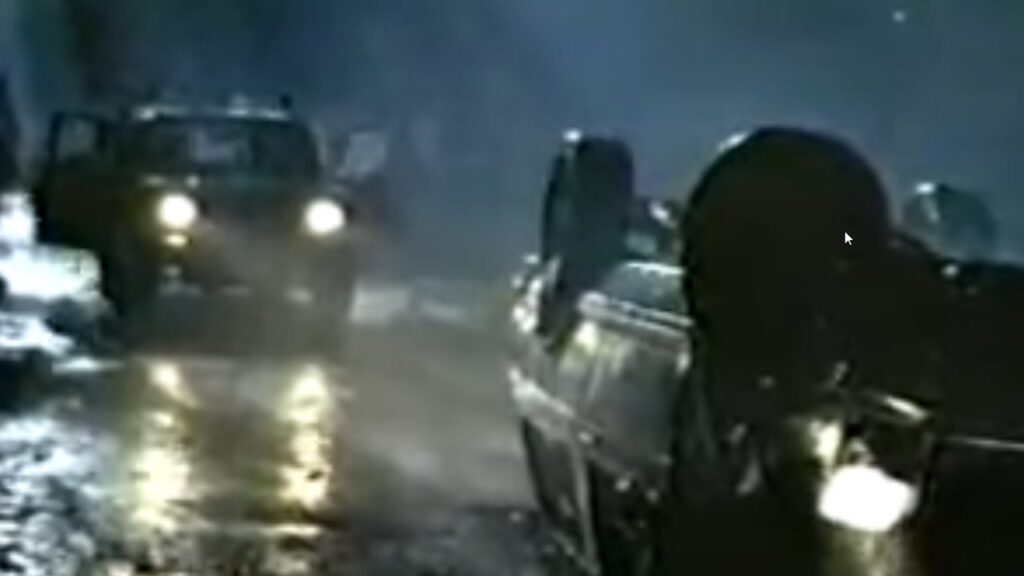 Near beginning of this TV episode on the Fox Network
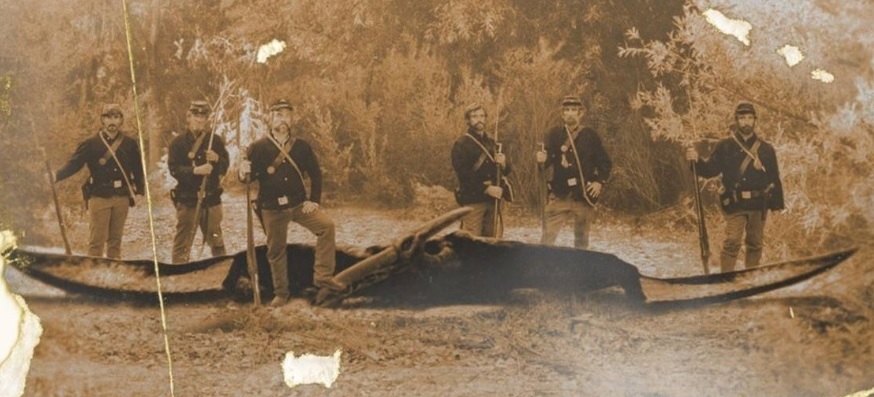
A key point in this fictional story is the discovery of an old photo of six “Civil War” soldiers posing beside the body of a huge Pteranodon-like animal. This is not just implied to be a photograph from the American Civil War: That point is clearly made in the communications between investigators.
The image shown several times in that episode appears to be identical to Ptp. With a deeper examination, however, it is clear that the bottom part of the picture is missing in that episode. Yet the complete image can now be found on a number of web sites, apparently none of which are directly related to any of the production companies involved, twenty-two years ago, in the creation of the TV episode in question.
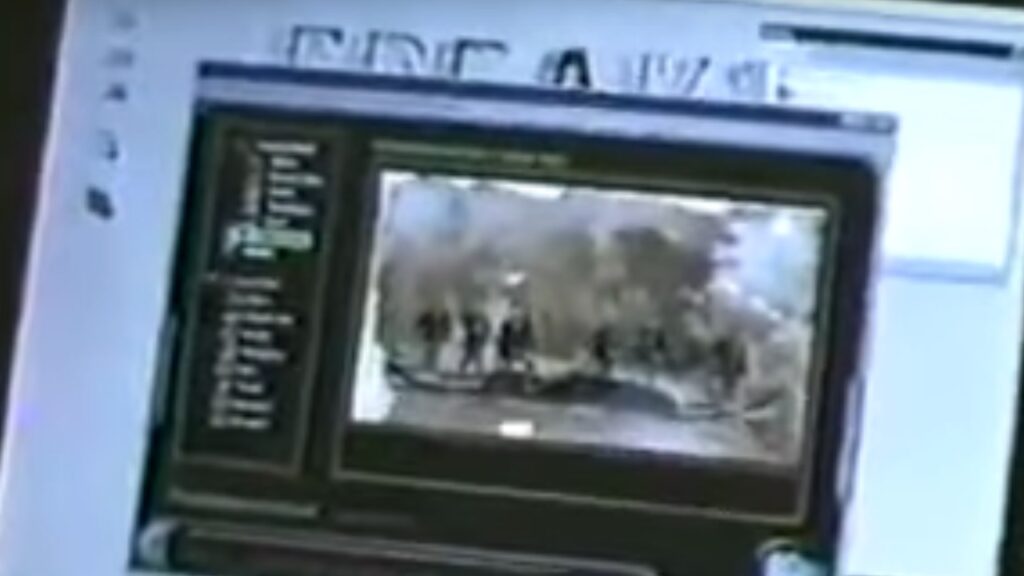 Most of the Ptp image is seen in this TV episode of FreakyLinks
In other words, where did the complete image of Ptp come from? There seems to be no evidence it came from any production company associated with the episode “Coelacanth This!”. It definitely did not come from anyone capturing the image from any portion of the episode itself. Most likely the producers realized that it was in the public domain, because of its age. They then used it in the production, even though they had used a fake photo in the pre-production web page that promoted the episode.
Let’s now get back to the “Civil War” aspect of the case. This must have been written in the script. So why do the men in Ptp have only a superficial resemblance to Civil War soldiers?
More to the point, why do we see an extraordinary apparent pterosaur, with details that include muscle structure in the neck? If this was a physical model or a computer model or a drawing, created by FreakyLinks, why do the soldiers have uniforms and equipment that are so UNLIKE what non-officer Union Civil War soldiers had? Why should the creature be so accurately portrayed while the men look so much like they lived AFTER the Civil War?
And why do five of the six men have right-handed pistol holsters while one has a left-handed holster? That detail is exactly what we could expect if these men were NOT Civil War reenactors or any other kind of actors. Very likely is this: They were photographed between about 1867 and 1880.
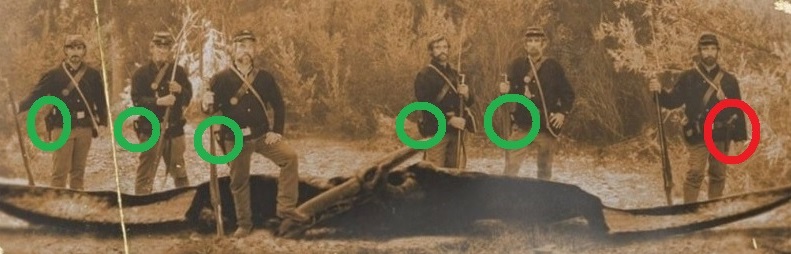 Proper ratio of right-handed to left-handed men
And why were those men standing like that, with one of them having a boot resting of some kind of object? Try this answer: Those men were standing around the large flying creature that we see in Ptp. Apparently this is not a hoax-pterodactyl but a genuine recently-deceased flying creature.
By the way, many persons have reported that they saw Ptp in an old book or magazine decades before the end of the 20th century. Of course, memory can play tricks on us, yet those declarations fit perfectly well with the concept that those six men appear very much like they lived before the beginning of the 20th century. And it’s not just their uniforms and equipment: Each has a beard or mustache style that fits that time period and those men have similar body builds, like they had been eating together for a long time or at least under similar conditions. What are the chances that six actors from the year 2000, chosen randomly, would fit together so well?
.
Addendum
There’s more to the mystery. What about the fake photo used in the pre-production web page? It was very likely intended, before filming, to be the image used in the episode itself. Here is a likely explanation, one that harmonizes with the details seen in the six men of Ptp and the detailed image of an apparent modern pterosaur in Ptp. It’s not the only possibility, just the most likely.
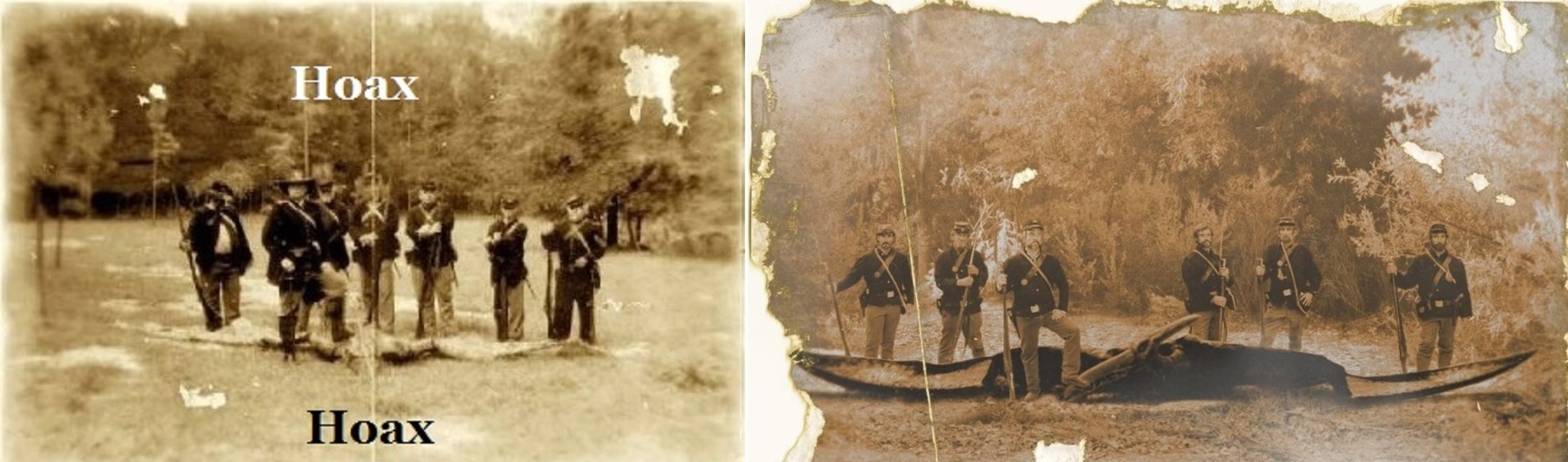
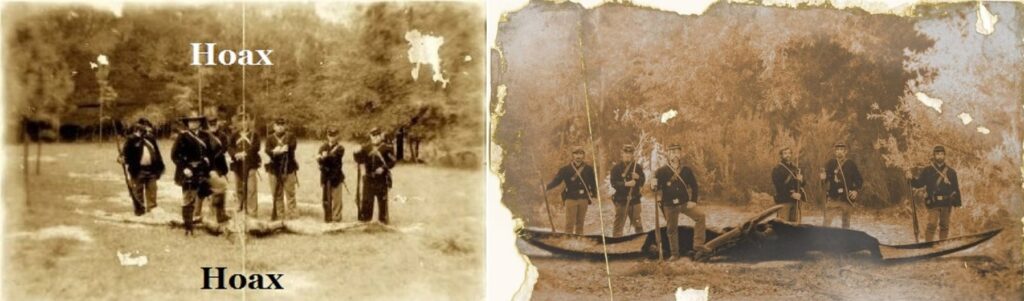 The pre-production image (“AP”) is on the left; Ptp, on the right
As of mid-November, 2022, I (Jonathan Whitcomb) believe that AP was staged by Haxan Films, and the arrangement of the actors and fake “pterodactyl” was an imitation of what is now called Ptp.
In other words, it is no coincidence that both images have the soldier in front with one boot on the beak or head of an apparent creature. I believe that Ptp existed first and AP was created to imitate it.
Keep in mind that the special effects company that worked with Haxan Films at that time was E=MC2 Digital. It is possible that the original image that was transformed into Ptp was obtained by E=MC2 Digital and assumed, at first, to be under copyright protection.
In other words, as of mid-November, 2022, I do not know if Ptp, with its discoloration and white blotches and scratch mark, is what E=MC2 Digital obtained from some old publication or if that original image was altered by E=MC2 Digital to make it appear older before giving it to Haxan Films for that episode of FreakLinks.
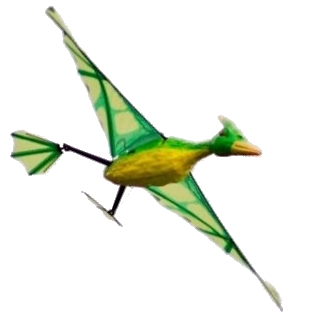
Regardless of whether E=MC2 Digital altered the original (that became Ptp) or not, I believe that Ptp (or the original of it) became the model for the creation of the AP photo: Ptp existed first. Nobody that I know of has any doubt about AP: It was a hoax created by using actors and a crude model that was supposed to look like a dead pterodactyl. If fact, that crude fake pterodactyl has been owned by a well-known cryptozoologist for some time, kept as part of his collection.
I believe that two things happened before filming began on the episode “Coelacanth This!”:
- The AP photo was found to be poor in quality
- Ptp (or the original version of it) no longer had a copyright issue
The main problem with #1 was the “pterodactyl”, which looked not only unconvincing as such an animal but was ludicrously so: If nobody told you that it was supposed to be a pterosaur, you might not guess what it represented.
The main solution with #2 may have been this: The production team or teams came to realize that there was no actual copyright issue, at least if they handled it carefully. They could have come to realize that it was now in public domain, because of its age, or they could have managed to alter it and present it in such a way that it would not have any reasonable way allowing anyone to make a copyright claim on it. Yet there is another explanation.
I believe that the most likely possibility is this: The production teams came to realize that the men who were photographed would no longer be living, so release forms would not be needed from them. In addition, there would not be any issue with copyright, for Haxan would make limited use of the Ptp image, and E=MC2 Digital could have further manipulated it. This would allow Haxan to invoke “fair use” with Ptp.
.
###
.
Apparently a real photo of a pterodactyl
If evidence shows that it was a physical object [pterodactyl or hoax], rather than only a digitally created non-real object, then we can look deeper into what that strange-looking thing might have been.
.
YouTube video on pterosaur eyewitnesses and Ptp
See how eyewitness testimony relates to video footage regarding modern living pterosaurs, a.k.a. “pterodactyls”. Also see the Ptp image whose origin comes not from modern actors or Civil War reenactors but from a photograph AFTER that war but before the beginning of the 20th century.
.
Missing Persons in USA – Attack from a Ropen?
I was 4 years old . . . I was heading to the house from the chicken house [at] about 8 a.m. when a large flying creature tried to grab me . . . The body (about the size of a Volkswagen bug) was covered in hair. . . . It had a beak with teeth . . .
.
Cognitive biases and modern pterosaurs
Dr. Laurie Santos, a cognitive scientist and professor of psychology at Yale, has commented on the bias called loss aversion: “We don’t like losing stuff . . .”
.
The Ptp “Civil War” photograph in context
In 2007, a businessman encountered a gigantic pterosaur as it flew in front of his car in Irvine, California, near the university . . .
.
Pterodactyl photo Ptp
. . . the image we have: apparent American soldiers, dressed like men of the Union army of the Civil War, at least with uniforms that suggest such to the casual observer of the apparently old photo.
.
The old flying dinosaur photo
I processed the Ptp image and cropped it to help people avoid distractions. Why did I alter the “Civil War flying-dinosaur photo”? I wanted to present it in a form that would most likely be closer to the original image than what we see in Ptp.
.
Apparent modern pterosaur in Mexico
I’ve been talking to my mother about the pterodactyl like creature she saw about 15 years ago. . . . in Lázaro Cardenas, Michoacán (Mexico) . . . Small pterodactyl like animal. Leathered. . . . Wingspan, as they weren’t completely open, could be a meter (bit more or less) . . .
.
Marfa Lights and flying predators
What kind of flying creature is the ropen? When eyewitnesses describe the features of this creature, it becomes obvious: The ropen is a large long-tailed pterosaur, AKA “pterodactyl.
.
The flying creature “ropen”
What do we know about the ropen? It is not confined to Papua New Guinea, which makes sense when we consider that the largest ones have wingspans greater than twenty feet. Flying creatures similar to the ropen of the southwest Pacific have been reported in Asia, Europe, Africa, and North America.
.