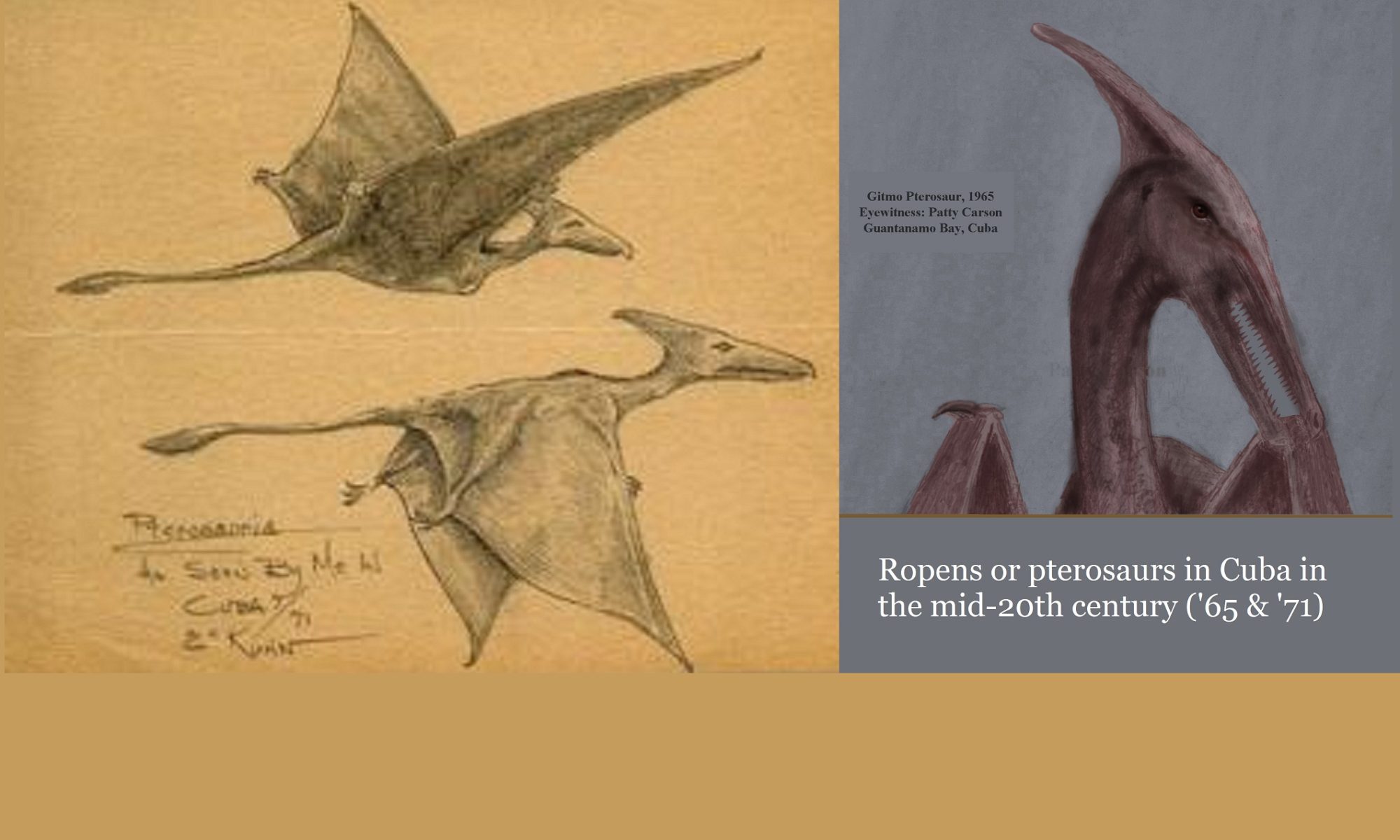


How is a deceased British entomologist related to a few American cryptozoologists? Observations of ropen lights in Papua New Guinea bind them into a select group who have witnessed what some of us believe to be the bioluminescence of living pterosaurs.
The other day [late summer of 2009] Richard Muirhead, a cryptozoology enthusiast who lives 35 miles from Liverpool, UK, sent me copies of several pages from the book “The Two Roads of Papua,” by Evelyn Cheesman (published by Jarrolds, 1935). E.C. was an entomologist whose expeditions included a stay deep in the mainland of what is now the nation of Papua New Guinea. I was delighted that Muirhead found this book, for it gives details of E.C.’s observations and deliberations on the strange lights near the village of Mondo. I now feel secure in proclaiming her sighting to be of a “ropen light,” similar to the lights seen on Umboi Island.
To learn more, go to the main Post page: “New insight into an old book.”
.
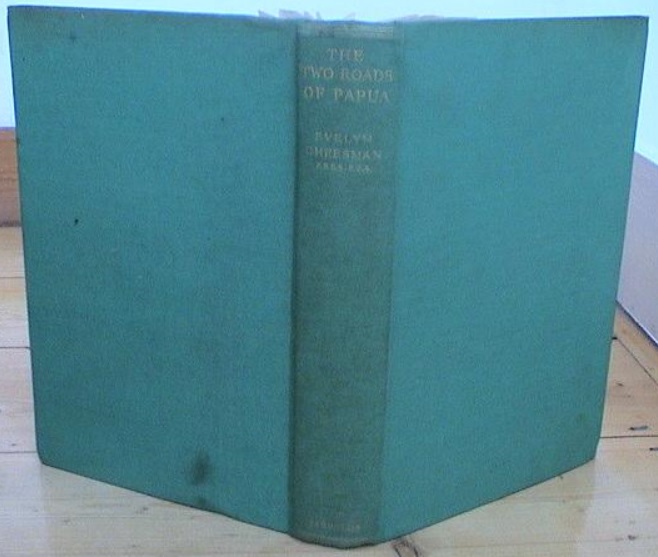
An old copy of the book The Two Roads of Papua, by Evelyn Cheesman
.
But Cheesman is not the only biologist to have witnessed strange flying lights. Peter Beach has taught biology at a small college in Oregon, and he has witnessed the flying lights that he and his associates believe are probably the bioluminescence of creatures that may be related to the ropen of Papua New Guinea.
To learn about the expeditions and observations of Peter Beach and Milt Marcy, see the post “Bioluminescent Pterosaurs in Washington State” (interview by Jonathan D. Whitcomb in 2004).
.
2 Replies to “Ropen Lights seen by a biologist”
Comments are closed.