








Although Destination Truth differs greatly from a nature documentary, both genres benefit from eyewitness
accounts. The Mandt Brother’s production handled this
well. I did not expect that the episode would include
details about Jacob Kepas’s childhood ropen-encounter; it
did not. But I was pleasantly surprised that the minister
was allowed to voice his opinions about the creature;
religious opinions are too rarely heard or considered in
television adventure shows, to say the least.
I believe that Josh Gates did very well in the limited time
his team had in their ropen search. The team was
successful in videotaping what most other adventurers
had failed to videotape. Except for the cave adventure, I
recommend Josh’s good judgment to future explorers: He
made some good decisions.
Without access to the original video footage obtained by
the team, I hesitate guaranteeing that the glowing orb
must be a ropen light, but it does resemble Paul Nation’s
video, an obvious resemblance for investigators who have
seen both. Unless someone comes up with a better
explanation, I will continue to hold up this Destination
Truth video footage as evidence for the reality of the
ropen of Papua New Guinea and for the reality of its
extraordinary bioluminescence.
documentary, both genres benefit from eyewitness
accounts. The Mandt Brother’s production handled this
well. I did not expect that the episode would include
details about Jacob Kepas’s childhood ropen-encounter; it
did not. But I was pleasantly surprised that the minister
was allowed to voice his opinions about the creature;
religious opinions are too rarely heard or considered in
television adventure shows, to say the least.
I believe that Josh Gates did very well in the limited time
his team had in their ropen search. The team was
successful in videotaping what most other adventurers
had failed to videotape. Except for the cave adventure, I
recommend Josh’s good judgment to future explorers: He
made some good decisions.
Without access to the original video footage obtained by
the team, I hesitate guaranteeing that the glowing orb
must be a ropen light, but it does resemble Paul Nation’s
video, an obvious resemblance for investigators who have
seen both. Unless someone comes up with a better
explanation, I will continue to hold up this Destination
Truth video footage as evidence for the reality of the
ropen of Papua New Guinea and for the reality of its
extraordinary bioluminescence.
documentary, both genres benefit from eyewitness
accounts. The Mandt Brother’s production handled this
well. I did not expect that the episode would include
details about Jacob Kepas’s childhood ropen-encounter; it
did not. But I was pleasantly surprised that the minister
was allowed to voice his opinions about the creature;
religious opinions are too rarely heard or considered in
television adventure shows, to say the least.
I believe that Josh Gates did very well in the limited time
his team had in their ropen search. The team was
successful in videotaping what most other adventurers
had failed to videotape. Except for the cave adventure, I
recommend Josh’s good judgment to future explorers: He
made some good decisions.
Without access to the original video footage obtained by
the team, I hesitate guaranteeing that the glowing orb
must be a ropen light, but it does resemble Paul Nation’s
video, an obvious resemblance for investigators who have
seen both. Unless someone comes up with a better
explanation, I will continue to hold up this Destination
Truth video footage as evidence for the reality of the
ropen of Papua New Guinea and for the reality of its
extraordinary bioluminescence.
Destination Truth
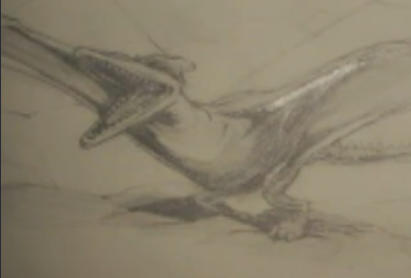
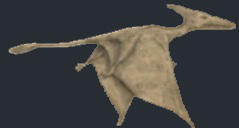
Josh interviewed several eyewitnesses, including Fabian,
who agreed that the large glowing creature that flies at night
looks like the American’s sketch of a pterosaur: It has a long
tail and a similar-looking head.
who agreed that the large glowing creature that flies at night
looks like the American’s sketch of a pterosaur: It has a long
tail and a similar-looking head.

Copyright 2007, 2008, 2009, 2010, 2011, 2012, 2015 Jonathan Whitcomb


A Mandt-Brothers-Produced Original Television Series
See the Official site: DESTINATION TRUTH
The Ropen of Papua New Guinea
with Josh Gates
An evaluation of the ropen episode—
by Jonathan David Whitcomb, author of
two nonfiction cryptozoology books:
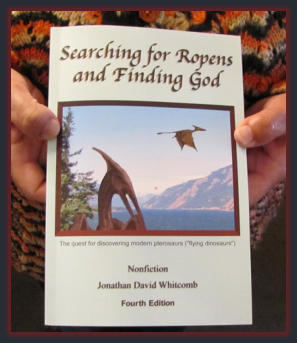
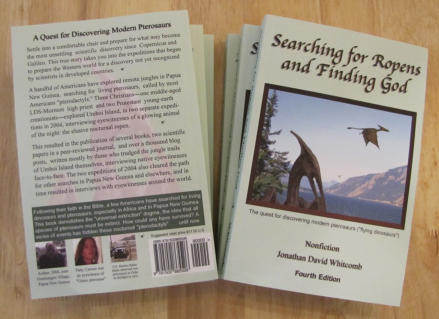
1) Searching for Ropens and Finding God
2) Live Pterosaurs in America (third edition)
Ropen Episode
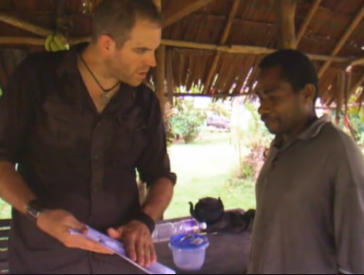
When an assistant from Neil Mandt’s people phoned me,
late in 2006, my associate, Paul Nation, was in the middle
of his expedition in a remote mountainous area of the
mainland of Papua New Guinea. Just before Eric Wing
and Neil interviewed me in their Hollywood office, I had
received news that Paul had videotaped some ropen lights
(also called indava lights: the first video footage of its
kind that would enter the United States). I told Neil about
Paul’s success, before the Destination Truth group left for
Papua New Guinea, and I then assured him that the ropen
was a real creature, not just a legend. I also warned him
of the dangers (humans in cities, ropens in jungles).
Adventure, danger, enlightenment—those I experienced
half a year later, sitting in my living room, delighting in
the ropen-episode of Destination Truth. I thought I
remembered advising the production team “do not” enter
a cave that might contain a ropen; oh well, it is a
Hollywood production: The audience enjoys risk.
I believe that the video footage obtained from this team,
together with Paul Nation’s video footage, are the first
two visual evidences, to enter the United States, of living
pterosaurs in Papua New Guinea. Thank you, Josh!
late in 2006, my associate, Paul Nation, was in the middle
of his expedition in a remote mountainous area of the
mainland of Papua New Guinea. Just before Eric Wing
and Neil interviewed me in their Hollywood office, I had
received news that Paul had videotaped some ropen lights
(also called indava lights: the first video footage of its
kind that would enter the United States). I told Neil about
Paul’s success, before the Destination Truth group left for
Papua New Guinea, and I then assured him that the ropen
was a real creature, not just a legend. I also warned him
of the dangers (humans in cities, ropens in jungles).
Adventure, danger, enlightenment—those I experienced
half a year later, sitting in my living room, delighting in
the ropen-episode of Destination Truth. I thought I
remembered advising the production team “do not” enter
a cave that might contain a ropen; oh well, it is a
Hollywood production: The audience enjoys risk.
I believe that the video footage obtained from this team,
together with Paul Nation’s video footage, are the first
two visual evidences, to enter the United States, of living
pterosaurs in Papua New Guinea. Thank you, Josh!
This episode first aired on television in June of 2007
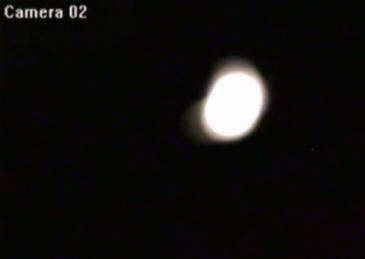
The Destination Truth expedition team, on a ridge high over
the sea, videotaped a strange flying light that the native
Fabian later identified as coming from the flying creature.
the sea, videotaped a strange flying light that the native
Fabian later identified as coming from the flying creature.
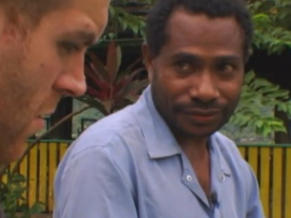
Fabian told Gosh that the glow (his team had
videotaped) is from the stomach of the “bird” (that
Josh and others call “ropen” - it’s not really a bird)
videotaped) is from the stomach of the “bird” (that
Josh and others call “ropen” - it’s not really a bird)
Live Pterosaurs in America (third
edition) by Jonathan Whitcomb
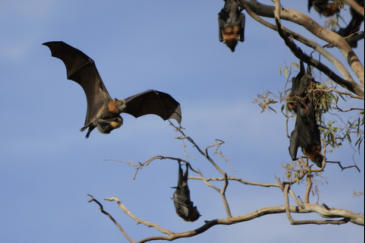
The Flying Fox fruit bat differs greatly from the long-tailed
flying creature that glows with bioluminescence at night
flying creature that glows with bioluminescence at night
Ropen expeditions are an example of active investigations in cryptozoology: searches for modern living pterosaurs; as of late-2014, however, no ropen has yet been captured
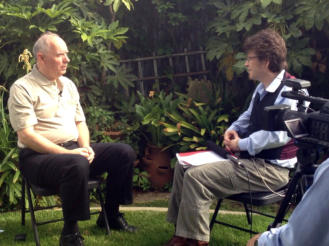
Jonathan Whitcomb (left) interviewed by Richard Syrett,
for a television talk show, for later in 2012, in Canada
for a television talk show, for later in 2012, in Canada
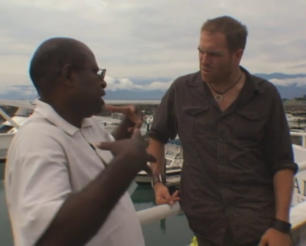
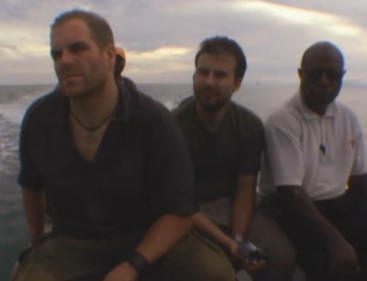
Native eyewitness Jacob Kepas (left) was interviewed
by Josh Gates (right), during the 2007 expedition
by Josh Gates (right), during the 2007 expedition
Jonathan Whitcomb has written extensively about the ropen of
Papua New Guinea and was the first Western explorer to interview
three native witnesses of the Lake Pung ropen sighting on Umboi
Island, Papua New Guinea (Whitcomb 2004 expedition). He has
shown why this is not a Flying Fox fruit bat. He is the author of
the nonfiction book "Live Pterosaurs in America."
Papua New Guinea and was the first Western explorer to interview
three native witnesses of the Lake Pung ropen sighting on Umboi
Island, Papua New Guinea (Whitcomb 2004 expedition). He has
shown why this is not a Flying Fox fruit bat. He is the author of
the nonfiction book "Live Pterosaurs in America."


Evaluated by Jonathan Whitcomb
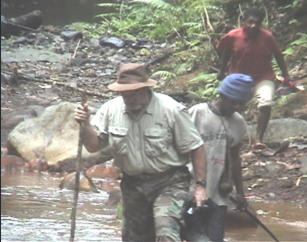
Paul Nation, 2002 Umboi Island expedition (ropen search)
Sketch of the “Gitmo Pterosaur” of Cuba,
drawn by the eyewitness Eskin C. Kuhn
“What more could we ask of the U.S. Marine
Eskin Kuhn and the little girl Patty Carson, two
eyewitnesses of “pterodactyls” at Guantanamo
Bay, Cuba, in the middle of the twentieth
century? They carefully observed those flying
creatures and later drew detailed sketches that
defy any misidentification conjecture that any
skeptic might throw at them.” (from the
Acknowledgements in this, the fourth edition -
a nonfiction book by Jonathan D. Whitcomb)
Eskin Kuhn and the little girl Patty Carson, two
eyewitnesses of “pterodactyls” at Guantanamo
Bay, Cuba, in the middle of the twentieth
century? They carefully observed those flying
creatures and later drew detailed sketches that
defy any misidentification conjecture that any
skeptic might throw at them.” (from the
Acknowledgements in this, the fourth edition -
a nonfiction book by Jonathan D. Whitcomb)
A quest for discovering modern pterosaurs - NONFICTION